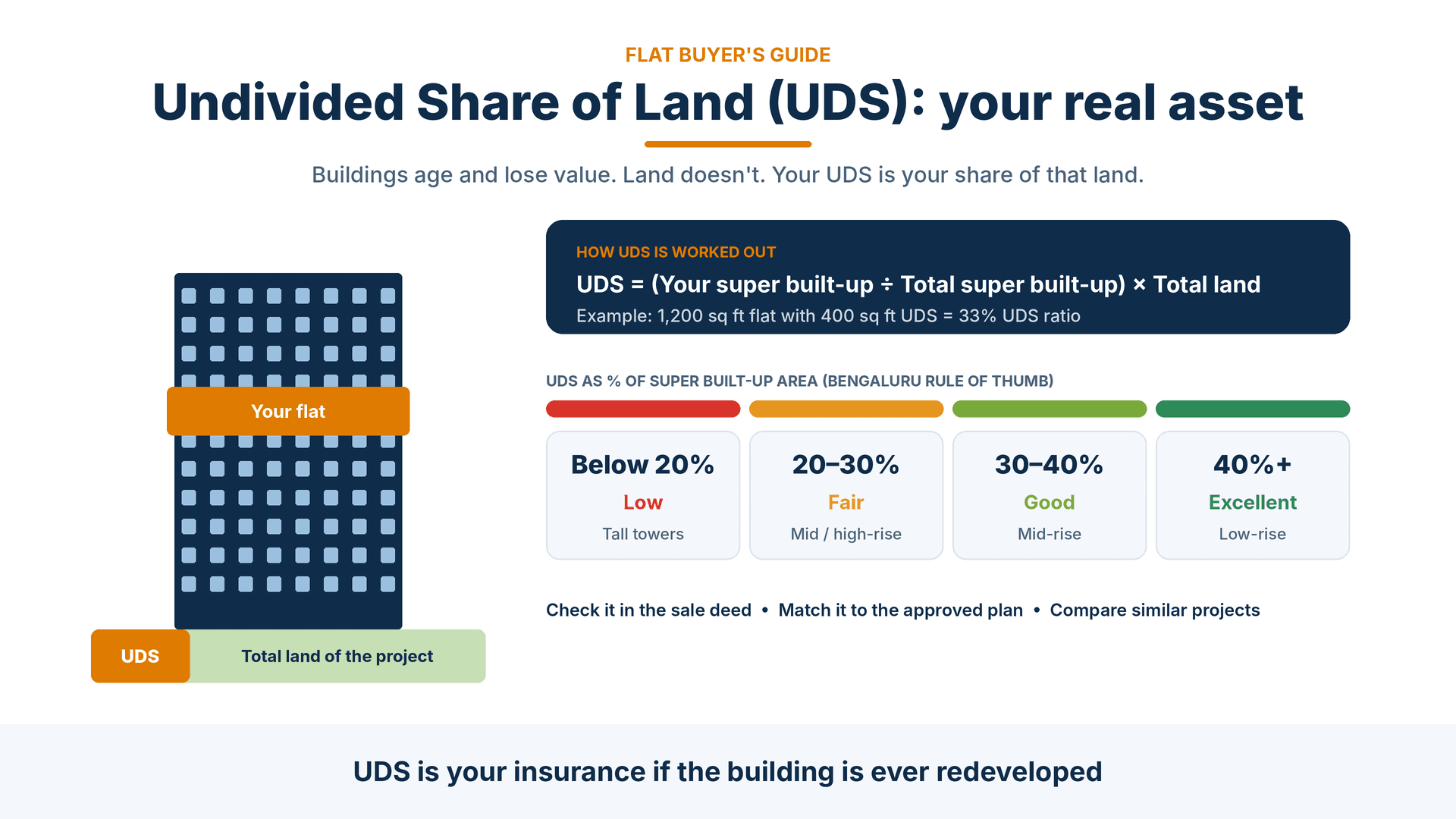
Key Takeaways
Free tools for this topic
What is undivided share of land (UDS)? When you buy a flat in an apartment building, you own two things:
- The flat itself: the built space you live in.
- An undivided share of the land: a proportionate share in the plot the building stands on.
It’s called “undivided” because the land isn’t physically split among owners. You can’t mark off your portion with a fence. Every owner holds a fraction of the whole plot, in proportion to the size of their flat.
Why UDS is important
1. Land appreciates while the building depreciates. A building ages, needs repairs and eventually reaches the end of its useful life. Land, especially in a growing city like Bengaluru, usually rises in value. Over 20–30 years, much of a flat’s value comes from the land underneath it. A higher UDS means a bigger share of that appreciating asset.
2. It decides your share in redevelopment. When an old building is redeveloped, owners’ entitlements in the new project are largely negotiated on the basis of each owner’s UDS. That covers the new flat area, the cash payment or both.
3. It protects you if the building is lost. If a building is demolished because of structural failure, a disaster or a legal order, the land remains. Your UDS is your claim on it.
4. It affects resale value and bank lending. Buyers and banks increasingly look at UDS when judging an older flat. A low UDS can reduce what a flat is worth as the building ages.
Does UDS act as insurance? In a practical sense, yes. Ordinary insurance covers the building. UDS protects the underlying value of what you own. If the building ages badly, is damaged or is sold for redevelopment, your share of the land is what remains with you. That’s why UDS is often called the real asset in a flat purchase.
How to calculate UDS
UDS = (Your flat’s super built-up area ÷ Total super built-up area of the project) × Total land area
Example:
- Total land area: 40,000 sq ft
- Total super built-up area of all flats: 1,20,000 sq ft
- Your flat: 1,200 sq ft
UDS = (1,200 ÷ 1,20,000) × 40,000 = 400 sq ft
UDS as a share of your super built-up area = 400 ÷ 1,200 = 33%
What UDS percentage is good? UDS depends mostly on how intensively the land is built on. More floors on the same plot means each flat gets a smaller share of land. As a practical rule of thumb for Bengaluru:
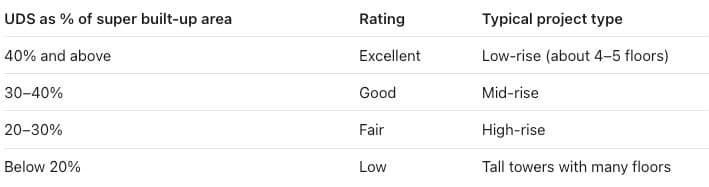
This is a general guide, not a legal or official standard. Compare UDS between similar projects in the same area rather than across very different building types.
A lower UDS isn’t automatically bad. High-rise projects often offer better amenities, security and locations. But you should know what you’re paying for and price it in, especially for long-term holding.
What to check before you buy
- Is UDS stated in the sale deed? It should be clearly stated in sq ft or sq m.
- Does it add up? All owners’ UDS combined should equal the total land area in the title documents.
- Does it match the approved plan? Check the land area and the number of units against the sanctioned plan.
- Phased projects: Make sure future phases or extra floors can’t reduce your UDS later.
- Common areas: Know whether clubhouses, roads or open spaces sit on land included in the UDS calculation.
- Resale flats: Check the original deed for UDS. Older documents sometimes leave it out or understate it.
In Conclusion
When you buy a flat, the walls and floors are only part of what you’re paying for. The land underneath is the part that lasts and usually grows in value. A healthy UDS protects your investment as the building ages and gives you a fair position in any future redevelopment. Before you buy, new or resale, check the UDS in the documents, compare it with similar projects and factor it into the price. A property consultant can help you verify the UDS and the title before you commit.
Disclaimer: This article is for general information only and is not legal advice.
Frequently Asked Questions
Related Real Estate Services & Topics
Need Local Property Assistance?
Get Expert Guidance on Bengaluru Real Estate
Whether you are buying, selling, leasing, or verifying title deeds, our advisory team is here to assist.
